Salary budget calculator
Split your salary the moment it arrives with the 25-10-15-15-35 rule — then track what you actually spend, day by day, against each part.
Already have one? Log in — your tracker opens here.
How the 25-10-15-15-35 rule works
Most budgets fail for one reason: they are drawn up after the money is spent. If salary lands on the first and is mostly gone by the tenth, no amount of reviewing the statement later fixes it. This rule works the other way round — allocate first, then spend — by giving every rupee a job on the day it arrives.
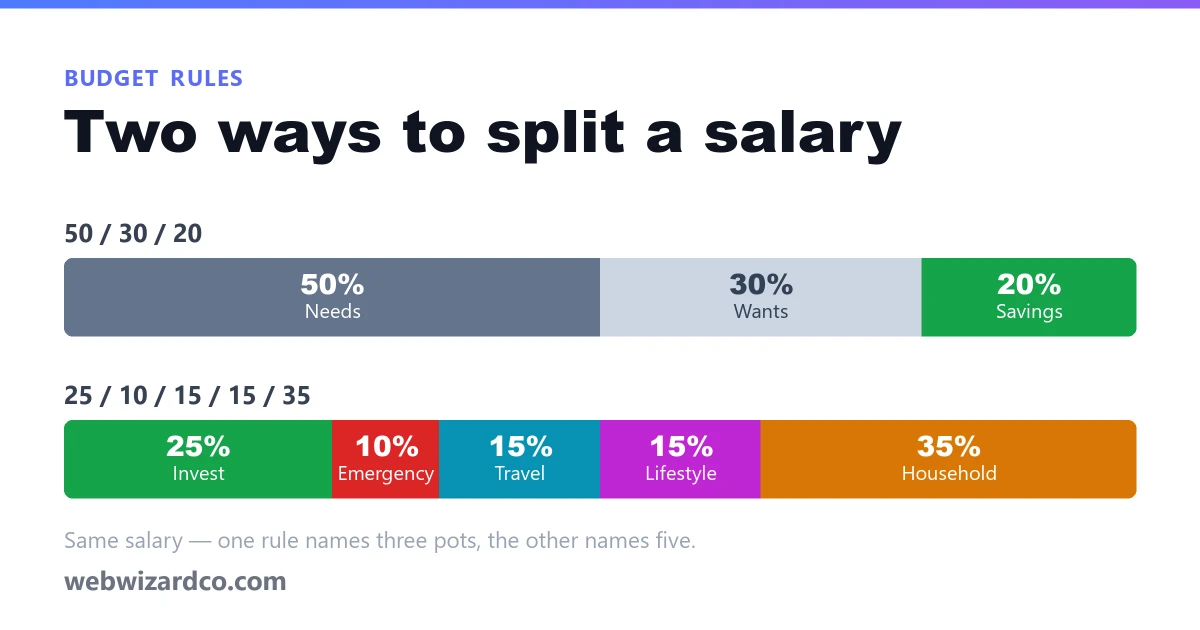
| Share | Goes to | What it covers |
|---|---|---|
| 25% | 📈 Investments | SIPs, PPF, NPS, stocks — money for goals that are years away |
| 10% | 🚨 Emergency fund | A buffer of at least six months of essential expenses, built steadily |
| 15% | 🚗 Travel & car | Fuel, EMIs, servicing, insurance, tolls and trips |
| 15% | 🎉 Lifestyle & personal | Eating out, shopping, parties, subscriptions and hobbies |
| 35% | 🏠 Household | Rent or home EMI, groceries, electricity, internet and other bills |
Why investments come first
Saving whatever is left at the end of the month usually means saving nothing, because spending expands to fill whatever is available. Moving the 25% out on salary day — ideally with an automatic SIP dated a day or two after payday — means the investment happens before anything else can compete for it.
Building the emergency fund
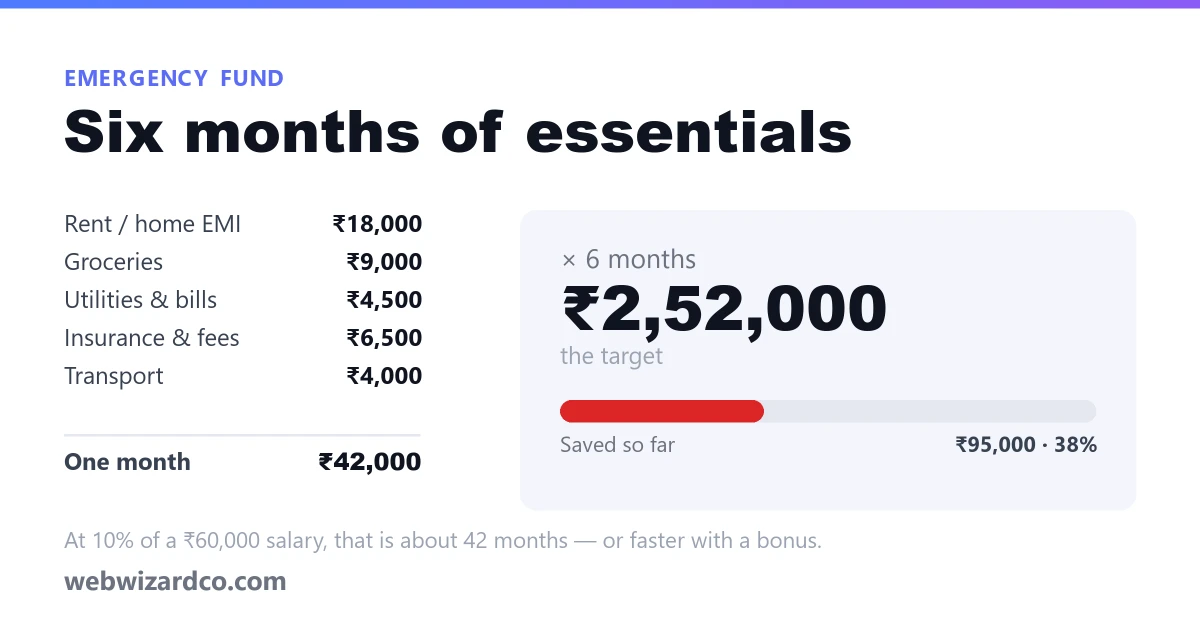
Add up one month of expenses you genuinely could not skip: rent or EMI, groceries, utilities, insurance premiums, school fees. Multiply by six. That is the target. At 10% of salary a month it takes a while to reach, and that is fine — the point is that it grows every month rather than being started after something goes wrong. Once the target is reached, the 10% can move to investments.
When the rule does not fit
The percentages are a starting point, not a law. Rent in a large city can take far more than 35% on its own; someone without a vehicle does not need 15% for travel. Adjust the split to your real life — the tracker lets you set your own percentages, as long as they still add up to 100 — but keep the order: investments and the emergency fund are decided first, and discretionary spending gets what remains.
Tracking daily and recurring expenses
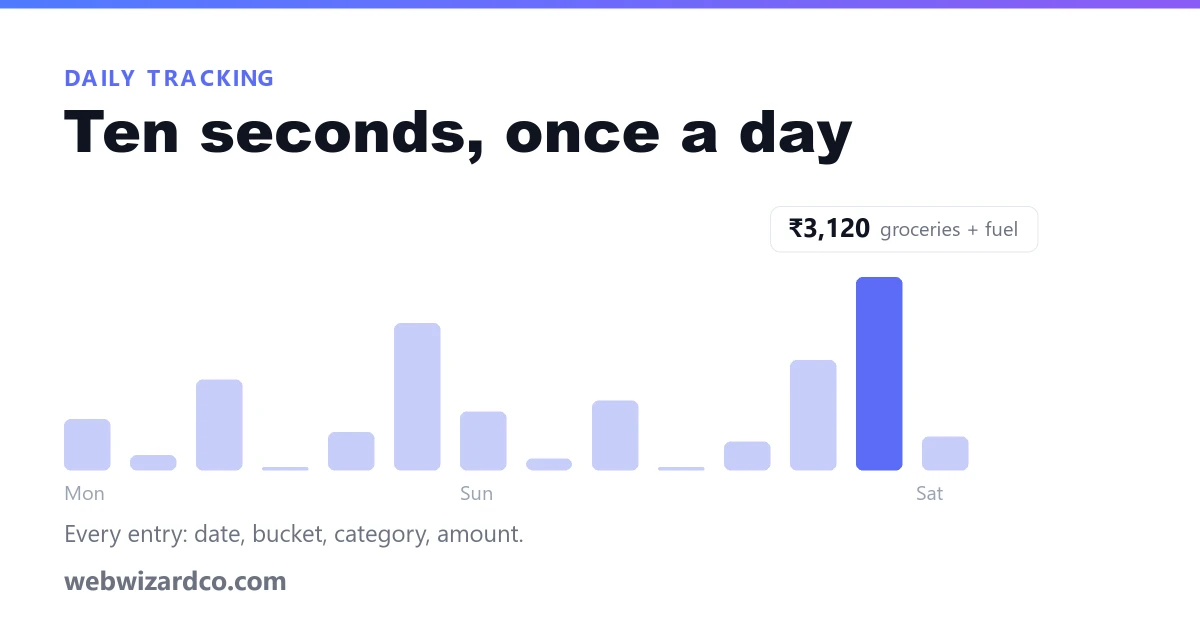
Allocating is half the job. The other half is knowing, part-way through the month, whether you are on course. With a free account you can log each expense in under ten seconds — date, bucket, category, amount — and see each bucket's budget, what you have spent, and what is left, updated as you go. Fixed costs such as rent, a SIP or a streaming subscription can be set up once as recurring expenses and are added automatically on their day each month. Charts show where the money went, whether you are spending faster than your salary allows, and how each month compares with the last twelve.
This is a general budgeting guideline, not personalised financial advice. Your situation — debts, dependants, income stability — may call for a different split.
Before you start
Three short guides on making a budget stick — and what the tracker does once you are in.